
Consumer Electronics
Agile and efficient, providing users with a better interaction experience

On September 9, the 27th China International Optoelectronic Exposition (CIOE) opened at the Shenzhen World Exhibition & Convention Center (Bao'an), drawing widespread attention.

PolarisIC showcased a range of chip and module products across its two core domains—depth sensing and low-light imaging—at the expo. Among them, the PCM7200, China's first commercial 3.2-megapixel SPAD area image sensor chip launched on September 4, garnered significant attention. During the expo, numerous industry professionals engaged in in-depth discussions and consultations with the company regarding its products, technologies, and market cooperation, and many expressed strong interest in collaboration.

PolarisIC's Booth at the Expo
The PCM7200 photon-counting image sensor is built on PolarisIC's second-generation proprietary 3D-stacked backside-illuminated (BSI) architecture, the PCM7200 achieves an array format of 2080H × 1568V at an 8 μm pixel pitch, setting a new industry record for the largest SPAD array. Equipped with the company's proprietary TunRes™ tunable-response pixel technology, the sensor dramatically reduces the pixel power consumption of large-format SPAD arrays while significantly enhancing its adaptability in bright-light and high-dynamic-range scenarios. This chip not only fills the domestic gap for commercial SPAD imaging products, but also marks PolarisIC's official entry into the commercialization of photon-counting imaging.

The PCM7200 enables imaging across a wide illumination range, from bright daylight to extremely low light at night, greatly expanding the imaging capabilities of SPADs in bright-light and high-dynamic-range scenarios. This completely breaks the industry's long-held perception that "SPADs can only image in low light," opening up entirely new possibilities for visual imaging. At the expo, the PCM7200 captivated visitors with its impressive performance and became the standout technical highlight of the show. A steady stream of attendees came to inquire, maintaining a vibrant atmosphere throughout.


A Steady Stream of Visitors at the Booth
The showcase centered on the PCM7200 to deliver a dual-scenario experience of "low-light and color imaging": a low-light chamber was set up on-site for real-time video capture, where image details remained clearly discernible even in faint-light conditions. In addition, an ambient-light imaging demonstration captured visitors within the exhibition hall in real time, outputting color images and intuitively presenting the sensor's exceptional imaging capabilities to attendees.


dToF New Products Make a Dazzling Debut
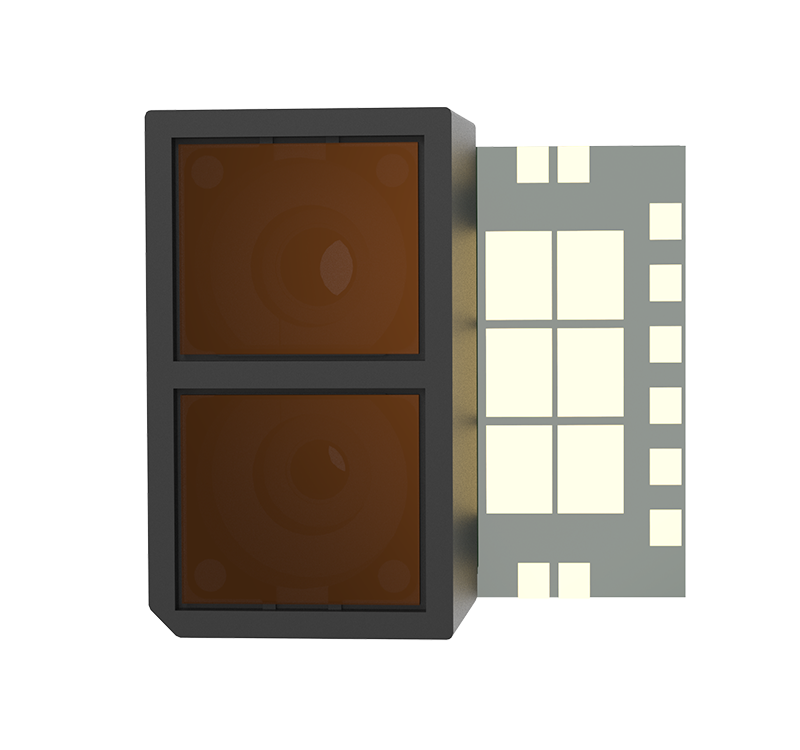
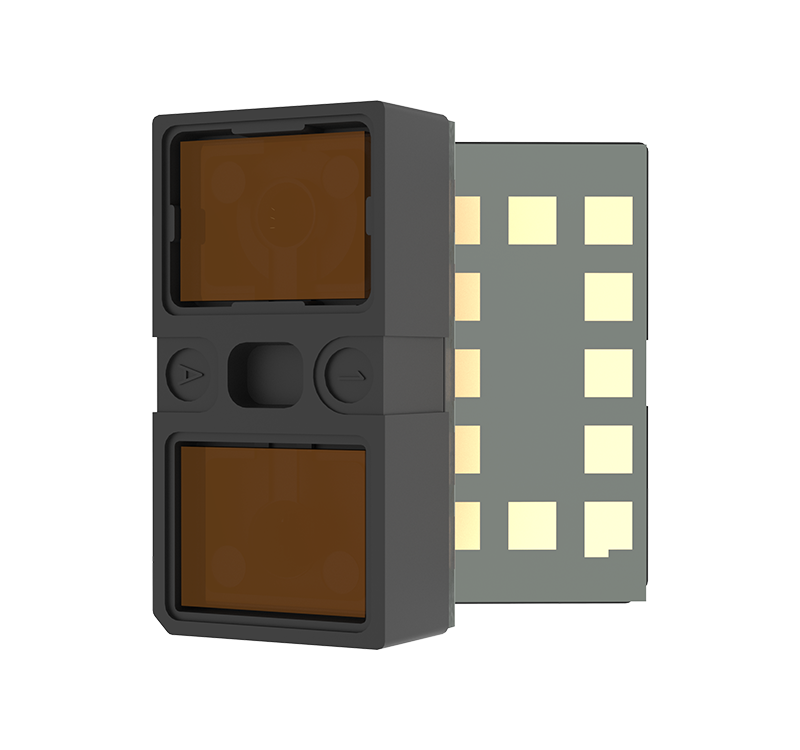
At this year's CIOE, PolarisIC unveiled a dazzling lineup of LiDAR modules, supporting multiple application configurations, including rotating LiDAR, oscillating-mirror LiDAR, and dual-line rotating-mirror LiDAR. A test setup simulating the operating environment of robot vacuums was built at the booth, where the PSH2607, PSH2608, and PSC2503 delivered impressive performance in live demonstrations, with precise and stable ranging — clearly showcasing the company's technical strength.

The PSH2608 is a high-performance direct time-of-flight (dToF) sensor designed for applications such as 360° rotating LiDAR, rotating-mirror LiDAR, and oscillating-mirror LiDAR. With a frame rate of up to 10.8Kfps and a range of 12 meters at 88% reflectivity, it enables customers to rapidly deploy high-precision, cost-effective ranging solutions.

| PSC2503 dToF Sensor
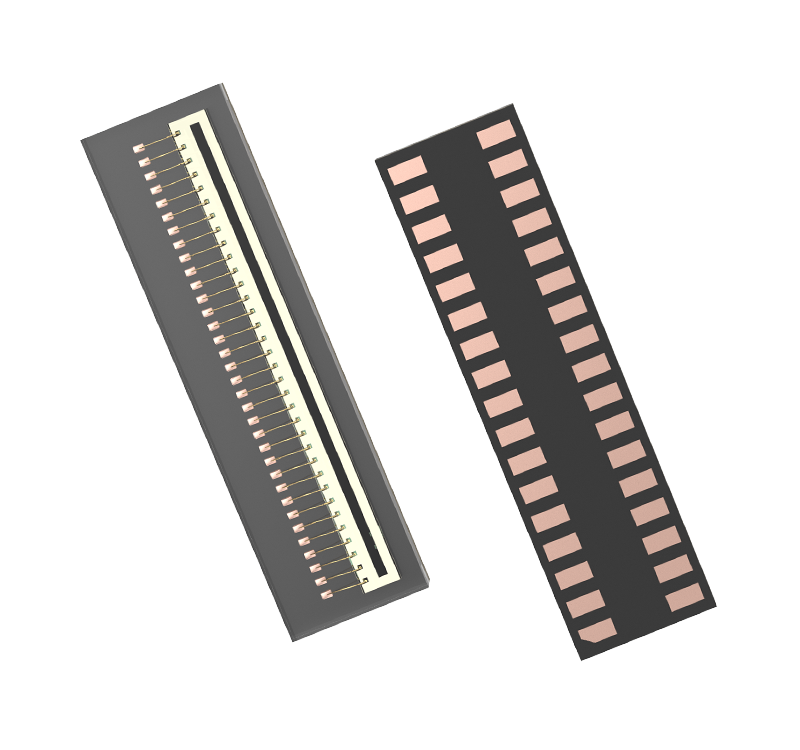
The PSC2503 is a mid-range, high-frame-rate dual-line sensor designed for dual-line rotating-mirror LiDAR applications, integrating PolarisIC's proprietary ranging chip and optical components. It achieves a range of 8 meters under strong outdoor lighting of 60 klux and up to 12 meters under moderate lighting conditions, while maintaining an ultra-high frame rate of 5040 fps per line. Easy to integrate, the product is a cost-effective ranging solution for consumer-grade robot vacuums.

| Mass-Produced Products Make a Strong Debut
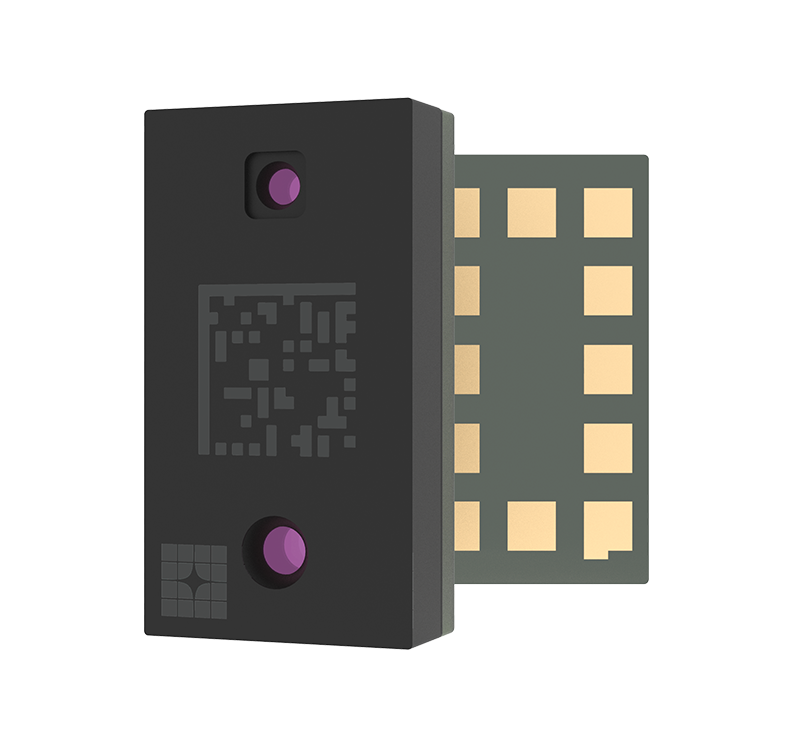
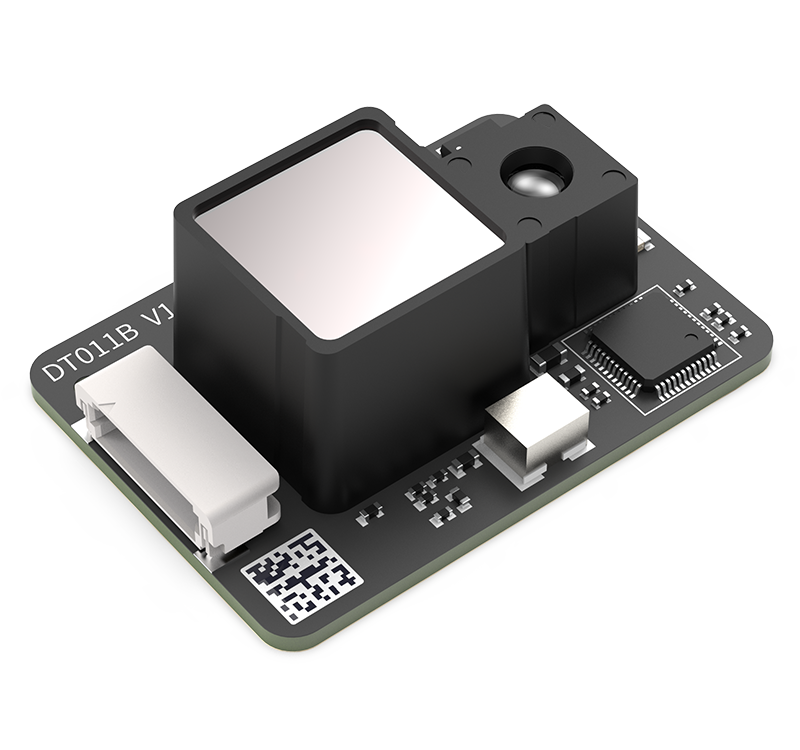
The DTS4004 miniature dToF sensor module, DTS6005 single-point dToF sensor module, DTS6010 single-point dToF sensor module, and PSH2501 dToF sensor were also showcased. In addition, the new industrial long-range ranging module, DTS6080, was unveiled, capable of precise ranging up to 65 meters and widely suitable for industrial ranging, UAV altitude holding, and obstacle avoidance applications.

| Multi-Material Ranging with dToF Products
The DTS6005 supports high-precision ranging scenarios such as cliff detection, top-view sensing, and wall-following sensing for robot vacuums, with a frame rate of up to 120 fps. It is also suitable for long-range ranging applications, including smartphone-assisted autofocus and smart devices, delivering centimeter-level precision up to 5.5 meters. Live multi-material ranging tests were demonstrated at the exhibition, allowing attendees to see the performance firsthand.

| Long-Range Testing
The DTS6080 was selected for this long-range test. With its laser beam projected onto the ceiling at various angles across the booth, attendees could clearly witness its long-distance ranging capability.